
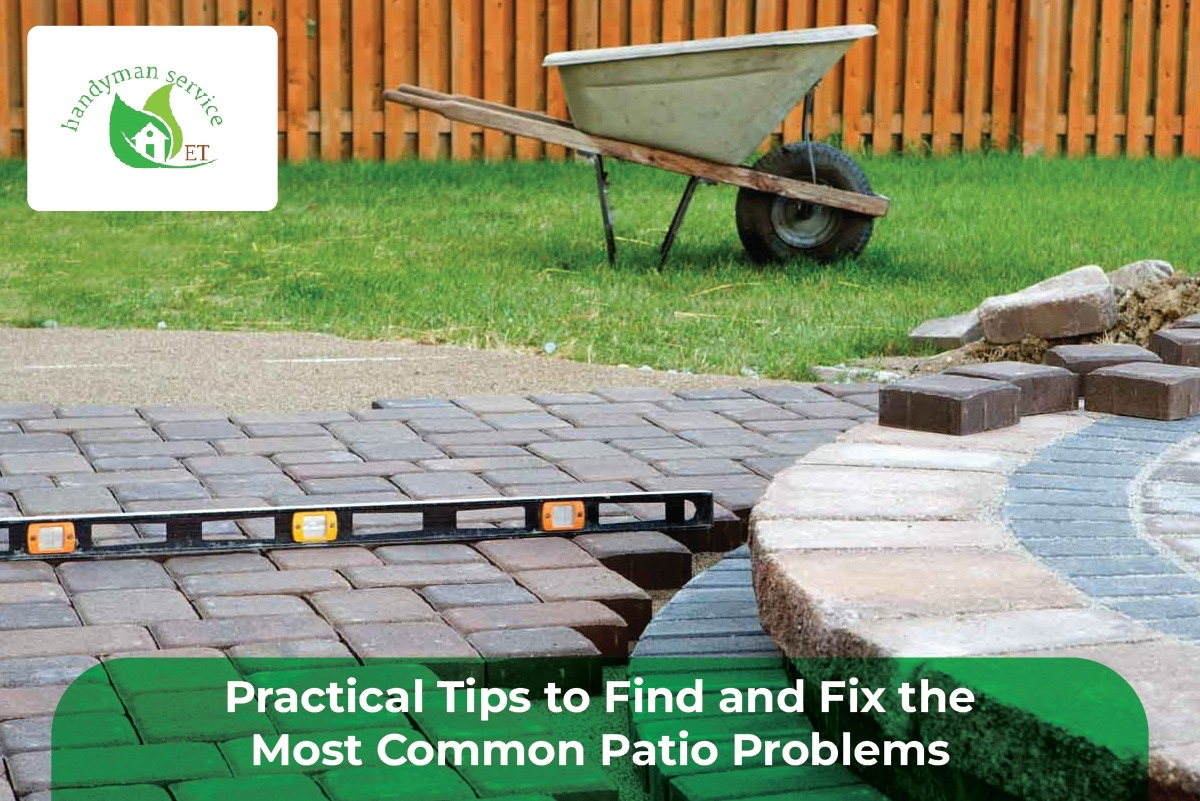
A well-designed patio should feel like your own slice of outdoor comfort—a place to enjoy morning coffee, summer BBQs, or late-night talks. But even the best patios wear down over time. Cracks show up, pavers shift, weeds push through, and stains become permanent guests. These issues don’t just look bad; they’re harmful. They can trip you, damage furniture, and even lower your home’s value. The good news? Most patio problems are easy to fix when you know what signs to watch for and how to respond before the damage grows. Whether you have concrete, pavers, or a backyard patio deck, this guide breaks down everything you need to identify, repair, and maintain your outdoor space properly.
Suppose you’re planning a complete upgrade or need professional help. In that case, you can explore trusted patio repair services at ET Handyman or check out their expert Patio Builders page for new installations and long-term solutions.
Spotting Early Patio Damage Before It Spreads
Minor issues often go unnoticed until they become major repair bills. The first step is learning to identify early warning signs so you can handle them fast.
Uneven Surfaces and Sinking Areas
If you feel like your patio tilts or dips in certain places, that’s usually a sign of soil erosion, water drainage issues, or long-term ground movement. Even subtle sinking can lead to expensive patio surface repair later. Walking across the patio should feel smooth and safe—not like you’re stepping on a hidden pothole.
Hairline Cracks on Concrete
Concrete patios typically develop minor cracks over time, but when those cracks start spreading, it becomes a structural concern. Early concrete patio repair is the most effective move because it prevents minor flaws from becoming major cracks.
Even better, quick patio crack repair options, such as flexible fillers or resurfacing, can refresh your patio without replacing the entire slab.
Understanding Why Patio Cracks Happen
Most patios don’t crack overnight. Cracks often appear from consistent pressure, temperature changes, or improper installation.
Weather and Temperature Shifts
Heat causes concrete and pavers to expand, while cold contracts them. Over time, this movement creates tension below the surface, eventually leading to cracks. If you live in an area with hot summers and freezing winters, regular inspections are essential.
Poor Drainage and Standing Water
Water is one of the biggest enemies of patio materials. When it seeps beneath the foundation, it weakens it. Once the soil shifts, your concrete or pavers crack. A key part of backyard patio repair is correcting drainage so the same damage doesn’t return.
Fixing Concrete Patio Cracks the Right Way
Concrete is strong, but it’s not invincible. Luckily, most cracks can be fixed without rebuilding the entire patio.
Using Crack Fillers for Small Repairs
Hairline cracks can be fixed using ready-to-use fillers or epoxy. These products bond tightly to concrete and prevent moisture from entering. It’s a quick, low-cost patio crack repair method that gives long-lasting results.
Resurfacing for Larger Cracks
If your patio has wider cracks or surface damage, resurfacing creates a brand-new top layer without replacing the base. This is one of the most cost-effective patio repair solutions because it restores appearance and durability in one step.
Repairing Shifting or Cracked Paver Patios
Paver patios look beautiful, but shifting stones and weeds can ruin their charm.
Leveling and Re-Sanding Your Pavers
If your pavers move or wobble when you walk, it’s time for quick patio paver repair. The fix usually involves lifting the affected pavers, adding more base sand, leveling the surface, and reinstalling them. This keeps your patio flat and free of trips.
Stopping Weed Growth Between Pavers
Weeds love the small spaces between pavers. Using polymeric sand blocks helps grow and strengthen the joints. It also improves your patio’s look and reduces future maintenance.
Dealing With Drainage Problems Around Your Patio
Water damage is the root cause of many patio issues. Fixing drainage early saves money down the road.
Regrading the Yard for Smoother Water Flow
If water constantly pools on or around your patio, regrading helps direct it away from the structure. Without proper drainage, you’ll keep running into cracks, wobbling pavers, and structural damage.
Adding French Drains or Gutter Extensions
Installing French drains or extending downspouts can stop water from flooding your patio. Once the water flow is controlled, patio surface repair becomes more effective and long-lasting.
Patio Deck Repair and Surface Restoration
If your patio is made of wood or composite decking, various problems may arise—such as rotting boards, loose screws, or fading.
Replacing Worn or Rotten Boards
Wood decks require regular inspection. If you find soft spots or discolored boards, replace them quickly. This keeps your deck safe and prevents structural failure.
Resealing or Restaining for Long Life
To protect your deck from moisture and UV damage, reseal it every one to two years. This small step can save you hundreds in patio deck repair costs down the road.
When to Call Professional Patio Repair Contractors
While DIY solutions work for minor issues, bigger damage requires professional help.
Complex Repairs Require Expertise
If your patio has significant structural problems, hiring patio repair contractors is the safest approach. They can analyze soil movement, foundation settling, and long-term drainage patterns before repairing.
Get a Clear Understanding of Patio Repair Cost
Every repair varies based on the material, size, and extent of damage. Professionals can provide accurate quotes so you understand your patio repair cost upfront—no surprises.
For expert services, check out ET Handyman Patio Repair Services for reliable help and long-term solutions.
Maintaining Your Patio to Prevent Future Damage
Once you fix your patio, don’t skip maintenance. Preventing problems is easier than repairing them.
Clean Regularly and Seal Surfaces
Sealing your patio protects it from stains, moisture, and weather damage. Clean your patio twice a year and reapply sealant depending on the material.
Manage Heavy Loads and Outdoor Furniture
Try not to drag furniture across the surface. Use protective pads to avoid scratches and cracks. A little care goes a long way in keeping your patio looking fresh.
Final Thoughts
Your patio should be a relaxing, inviting space—not a stress point. With these practical tips, you can find and fix most patio repair issues before they grow. Whether you need quick DIY fixes or complete backyard patio repair, staying proactive is the key to long-lasting beauty and safety. For modern design inspiration, you can also explore 2025 patio design trends.
FAQs
1. What causes most patio cracks?
Weather changes, soil movement, and poor drainage are the leading causes of patio cracks.
2. How much does patio repair cost?
The patio repair cost depends on the type of damage, patio size, and materials. Minor repairs are affordable, while structural fixes cost more.
3. Can I repair my patio myself?
Yes, minor cracks and loose pavers can be DIY projects. Professional patio repair contractors should handle significant issues.
4. How long does concrete patio repair last?
Good-quality repairs can last many years, especially if you maintain the patio and seal it regularly.
5. How do I stop weeds from growing between pavers?
Applying polymeric sand blocks weed growth and strengthens paver joints.




Recent Comments